Hello Westerinos,
Welcome back to Project: 100 Westerns! I’m still scuttling along, watching Western movies from across a hundred years of Hollywood.
I ran short on time this month and only eye-zapped three pictures. Two from 1953, the height of Western mania, and one candidate for the best, most-recently released genre offering.
#44. The Stranger Wore a Gun (1953)
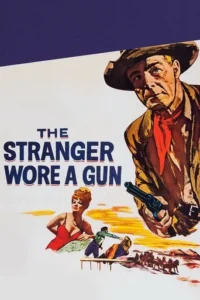
Based on a short story by John W. Cunningham (who also wrote the story in which High Noon is adapted from), this quick-hitter Western is mostly forgettable despite the notable cast.
Fan favorite Randolph Scott plays Jeff, a former spy in the Middle West theater of the Civil War. Becoming disillusioned by William Quantrill’s unsavory actions, he enlists as a regular solider for the Confederacy, and when the fighting’s over he fuck offs to Arizona to reinvent himself. The following plot is frankly, a bore: Jeff (going by “Mark Stone”) seeks redemption for his sordid past and attempts to thwart a criminal businessman in his attempt to rob a local stage coach operation.
The Stranger Wore a Gun is a morally confused movie that is too flat and conventional to hold this viewer’s attention. The cast keepsit together, Scott, who frankly I haven’t been too impressed with in the handful of his Westerns I’ve watched, is a capable leading man, and the heavies, played by Lee Marvin and Ernest Borgnine in their baby-face era, approach “interesting”. There’s a hazy romantic thread with Claire Trevor’s character in this too, but it gets sorta hijacked by Joan Weldon’s townie role.
The quirky element of this film is that it was originally filmed for 3D, so there’s a bunch of jarring shots of actors throwing punches or shooting lead straight toward the camera lens, which his essentially lost in the modern 2D print. The project as a whole serves as a time capsule of both Westerns and the film industry, which is basically true of a lot of the films I’ve reviewed, but hey, I’m trying to be gracious here.
#45. Kansas Pacific (1953)
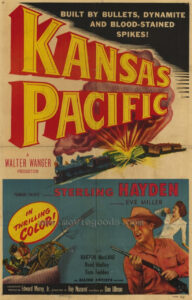
Here’s another film from 1953, and another use of William Quantrill as an antagonist, which is at least the fourth time a Project: 100 movie has featured the radical guerrilla fighter. Sort of weird how some names drop from the zeitgeist, right?
This is technically a Western, but also more of a political thriller. A Captain in the Army Corp of Engineers (Sterling Hayden) is sent (undercover) to Kansas to help oversee a railroad that will be instrumental in the inevitable Civil War. Upon arrival, he is tasked not only with the hiring of workers and the logistics of a huge infrastructure project, but must also contend with Southern sympathizers seeking to destroy the railway.
Hayden plays the lead stiffly, which sort of works as he’s a direct military guy with the narrow mission of building a thing quickly and proficiently. The plot ramps steadily, first the Captain needs to survey the thorny situation, recruit and retain railmen, and then tamp down the pro-South saboteurs. There’s some neat maneuvering between the two factions as they attempt to achieve goals without heavily exposing their motives or members. It’s not until the last portion of the movie that we get some (welcomed) explosions and gunplay.
It’s a pretty inane movie, plainly. Director Ray Nazzaro does a fine enough job: the camera work carries this for the most part, but there’s very little for the actors to do, overall.
#46. Old Henry (2021)
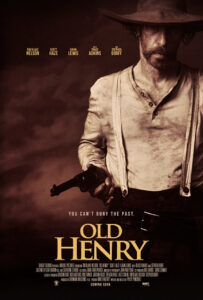
“You have no idea the hell storm you’re about to let loose”.
If you’re looking for the best Western released in the last five years, you’ve found it.
Tim Blake Nelson, a top-tier character actor in the modern age, stars as Henry McCarty, a farmer in Oklahoma Territory who lives with his teenaged son. When an injured stranger wanders into their life, Henry is confronted by a trio of lawmen who threaten his homestead , demanding the return of the alleged outlaw.
That’s all I can give you on plot specifics, because wow, this one takes you for a ride.
What immediately leaps out at you from the screen is the effortless way the script relates the intelligence and savvy of its characters to the audience. Henry is a seasoned guy, from his folksy bits of poetic advice, to how he handles a shovel or gun, it’s apparent this guy has been around and is pretty much over all of it. His counterpart, the villainous Sheriff Ketchum (Stephen Dorff), is equally as astute and clever, making for a perfect foil.
Writer/director Potsy Ponciroli achieves all he set out to do, and more. It’s a well-shot movie, featuring dynamic horizons and ferocious bursts of violence. The rolling hills of the Tennessee (posing as Oklahoma) locale makes for a defining setting, and lets the viewer know this tale is far from the dusty valleys of the Southwest, which is mentioned frequently as a place the characters are familiar with.
I had heard this movie was a gem, and it did not disappoint. A testament that you can still make an awesome genre film on a budget.
Be sure to check back in on December 2nd 2025! We’ve got a special holiday Western that I’m itching to show yunz!
Westward!
~Jamil